





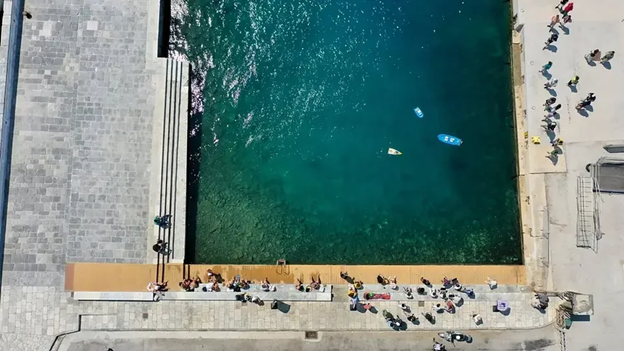
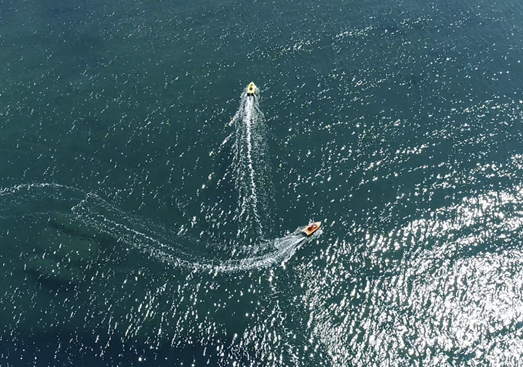
The University of the Aegean has made significant contributions to the field of autonomous maritime systems and digital vessel technologies, resulting in a series of innovative developments and impactful research outcomes. One of the key initiatives has been the setup of the Aegean Robot Race, which is recognised as one of the very first autonomous surface vehicle (ASV) competitions in the European Union. This event not only showcased the university’s technical capabilities but also provided an experimental testbed for real-world validation of autonomous navigation, mission planning, and marine robotics research.
In parallel, the university spearheaded the development of an NMEA-compatible companion computer—an innovative Internet of Things (IoT) device designed to provide real-time access to vessel data and control mechanisms. This companion computer acts as an intelligent interface between the vessel’s onboard sensors and its control systems, enabling seamless integration of navigation data, machinery status, and environmental parameters. Building upon this system’s design and combination of hardware components, a software framework was created to allow remote mission assignment and live monitoring of Autonomous Surface Vehicles using the IoT companion device.
Handling large-scale maritime data streams with precision
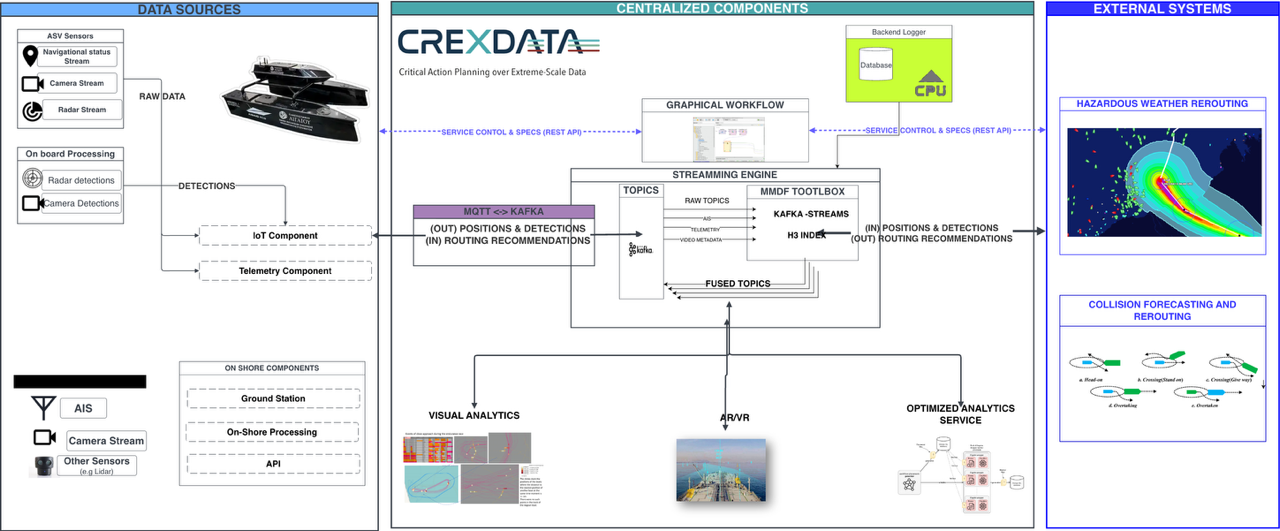
Through this system, operators can design, deploy, and supervise complex missions without requiring direct physical access to the vessels, effectively enabling scalable fleet management in marine environments. Complementing these developments is the creation of the Multi-Modal Data Fusion (MMDF) toolbox, which integrates a workflow designer and a streaming fusion engine for real-time, spatio-temporal data processing. By leveraging the Kafka stream processing framework along with the H3 spatial indexing system, the MMDF toolbox allows researchers and operators to handle large-scale maritime data streams with precision, fusing information from multiple sources such as AIS, ASV telemetry, and environmental sensors.
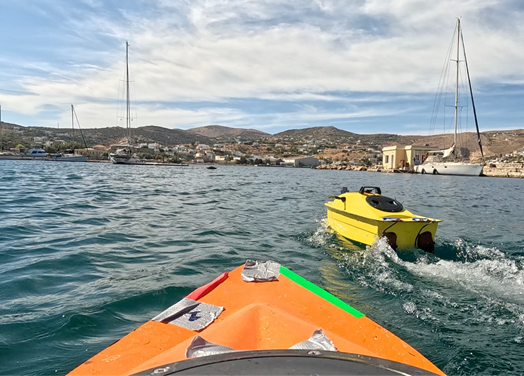
This capability is crucial for enhancing situational awareness and supporting applications like predictive maintenance, environmental monitoring, and autonomous navigation under dynamic conditions. The University of the Aegean’s research team has further designed an overall system architecture that interlinks the autonomous vehicle prototypes, the MMDF toolbox, and the IoT companion computer, effectively enabling the digital twin concept for vessels at sea. Digital twin functionality allows a virtual representation of each vessel to be maintained in near real-time, mirroring its operational status, environmental context, and mission progress, which significantly enhances both simulation capabilities and operational decision-making.
These integrated efforts within the CREXDATA project have positioned the university as a leader in maritime autonomy and intelligent vessel systems. Beyond the technological innovations, the university has disseminated its research widely, with more than ten publications in high-quality scientific journals and international conferences. These publications highlight the methodologies, experimental results, and lessons learned from implementing autonomous surface vehicle systems, multi-modal data fusion processes, and IoT-enhanced maritime operations.
Fostering new opportunities in the maritime technology landscape
Collectively, the initiatives reflect a comprehensive approach that spans systems design and combination of hardware components, software engineering, data science, and applied marine research. By bridging theoretical research with practical applications, the University of the Aegean is contributing to the evolution of the European maritime technology landscape, fostering new opportunities in sustainable shipping, autonomous marine exploration, and smart port operations. Its pioneering work in combining autonomous surface vehicle architectures, scalable data fusion frameworks, and digital twin technologies underscores a vision for the future of intelligent and resilient maritime systems, with significant potential for industrial adoption and societal benefit.