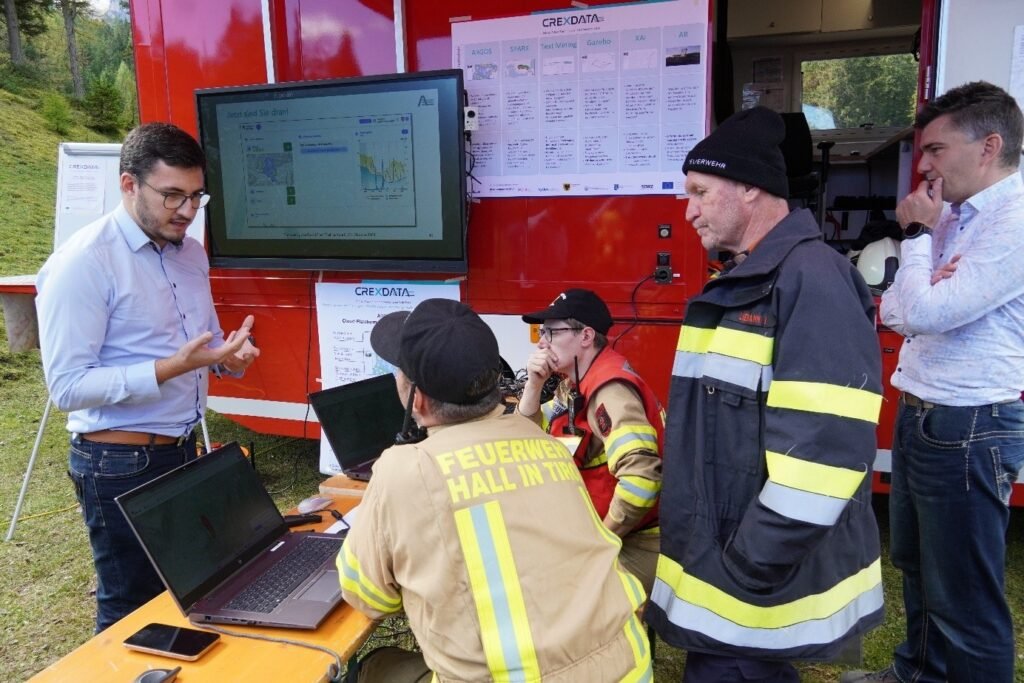


Disaster Competence Network Austria (DCNA) has successfully concluded a series of high-tech field trials within the EU-funded CREXDATA project, validating new AI-driven workflows and Augmented Reality (AR) tools designed to assist emergency responders in extreme weather scenarios.
As a key partner contributing to the project’s “Weather Emergencies Use Case,” DCNA facilitated real-world testing in the Austrian Alps, focusing on Work Packages 2 (Use cases and pilots) and 5 (Transparent AI and Visual Analytics).
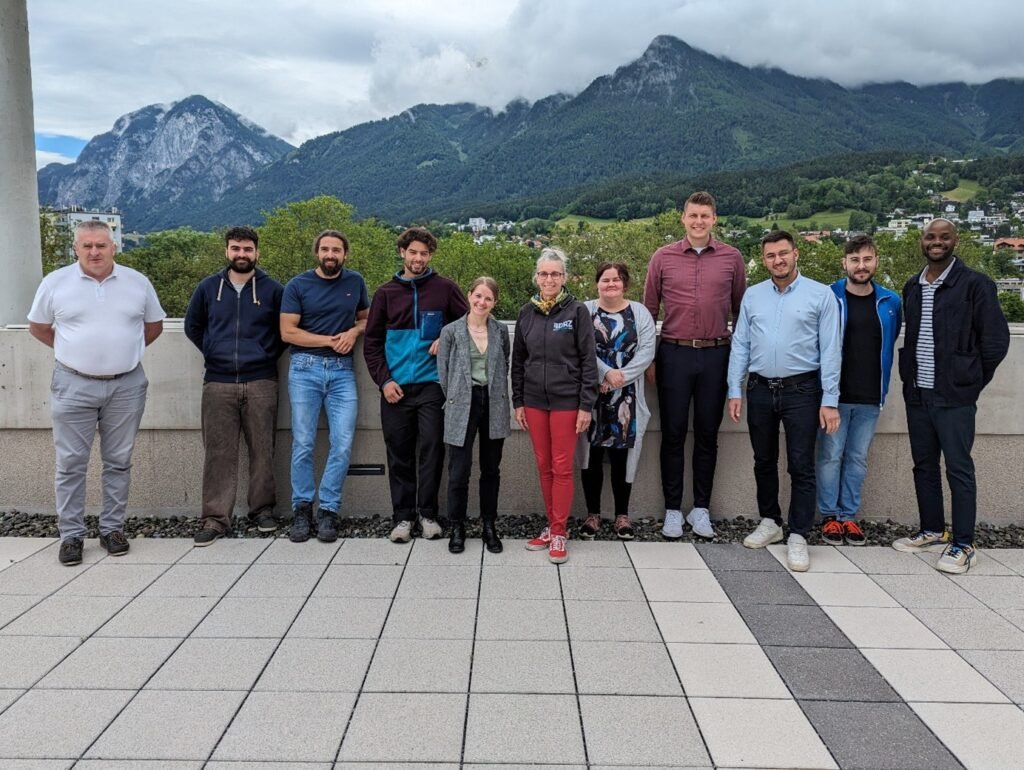
Real-Time Data Integration for Flood Response
In June 2024, DCNA led the first major trial at the University of Innsbruck, simulating a disaster response operation triggered by a heavy rain event. The primary objective was to evaluate the CREXDATA system’s ability to integrate real-time data from diverse sources to accelerate decision-making.
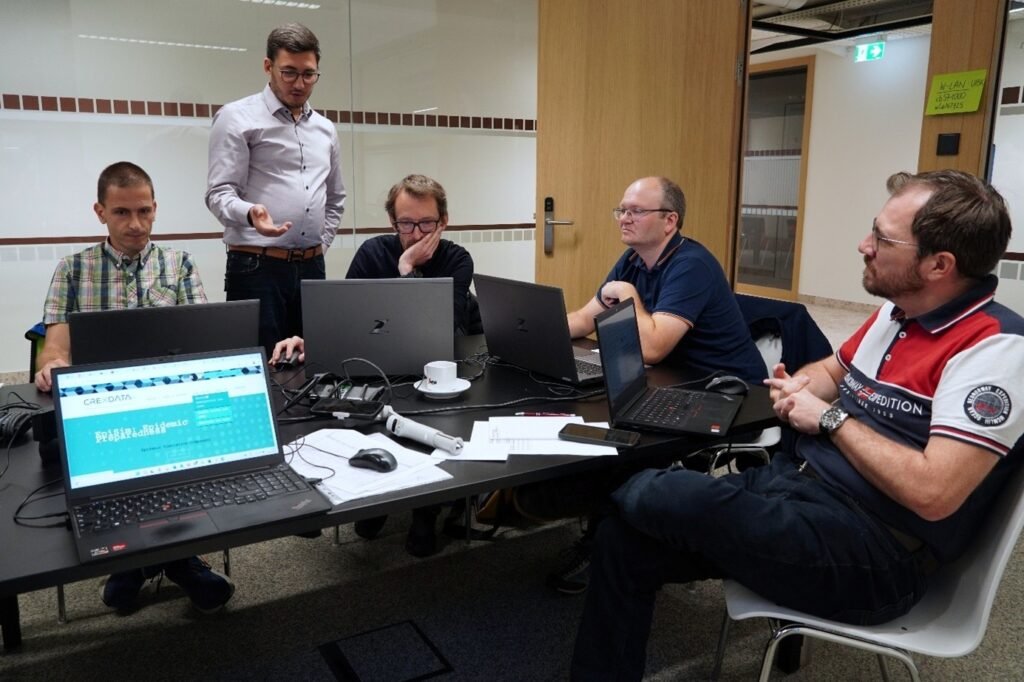
This trial was conducted in collaboration with the COLLARIS project, enabling a joint evaluation of emerging Unmanned Aerial System (UAS) technologies. A technical highlight of this phase was the testing of Neural Radiance Fields (NeRF), a machine learning technique used to generate interactive 3D environments from visual data captured by drones, enhancing situational awareness for command centers. Stakeholders, including firefighters and local authorities, reported that the tools significantly improved data integration and analytics speed.
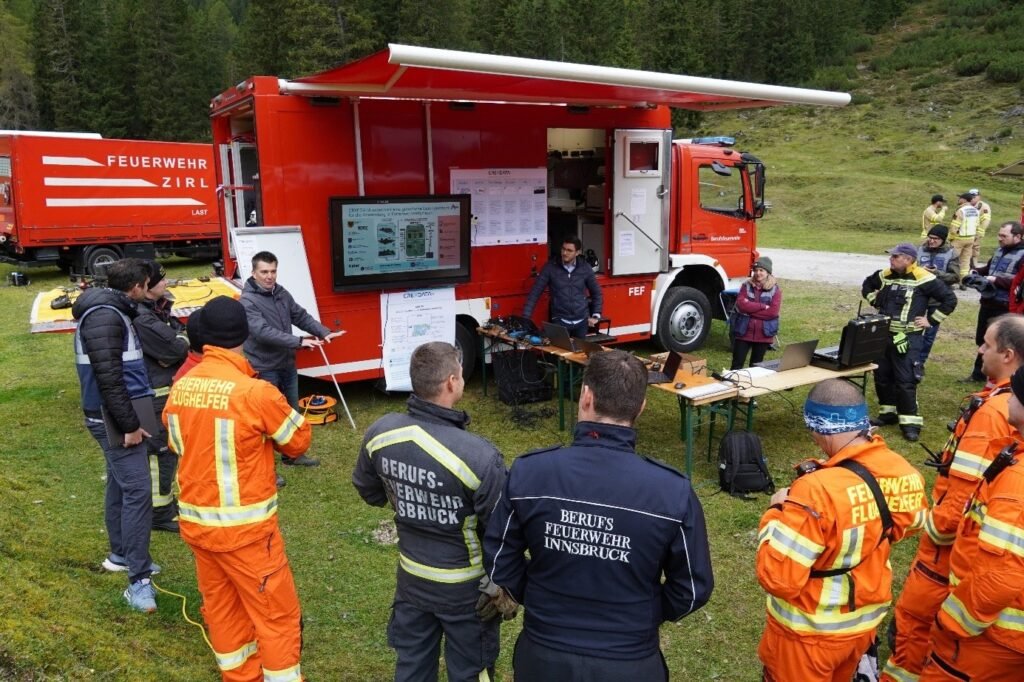
Wildfire Management via Augmented Reality (AR)
The final validation phase took place in October 2025 in Innsbruck and Telfes, Austria. This two-day event not only focused on flood but also wildfire management, allowing emergency stakeholders to test the system under “live” conditions during a large-scale forest fire exercise in the Stubai Alps.
Key technical demonstrations included:
- RapidMiner AI Studio Workflows: Participants attended a workshop where they designed graphical workflows to model critical situations.
- ARGOS System Visualization: The output of these AI workflows was visualized in real-time using the ARGOS system, providing commanders with a dynamic operational picture.
- Augmented Reality (AR) Support: Operational fire brigades tested AR glasses in the field, evaluating how data overlays could support decision-making and situational awareness amidst active response efforts.
The trials confirmed that the CREXDATA system could successfully fuse data and provide actionable decision support in authentic, high-stress environments.