

As part of the EU-funded CREXDATA project, the National Center for Scientific Research “Demokritos” is introducing a suite of AI-driven methodologies designed to master extreme-scale data through Interactive Learning for Simulation Exploration. By coupling complex simulators with advanced machine learning, researchers are enabling agile decision-making and flexible action planning for high-stakes environments like flood management, health emergencies, and maritime safety.
Optimizing Crisis Response: Genetic Algorithms and Reinforcement Learning
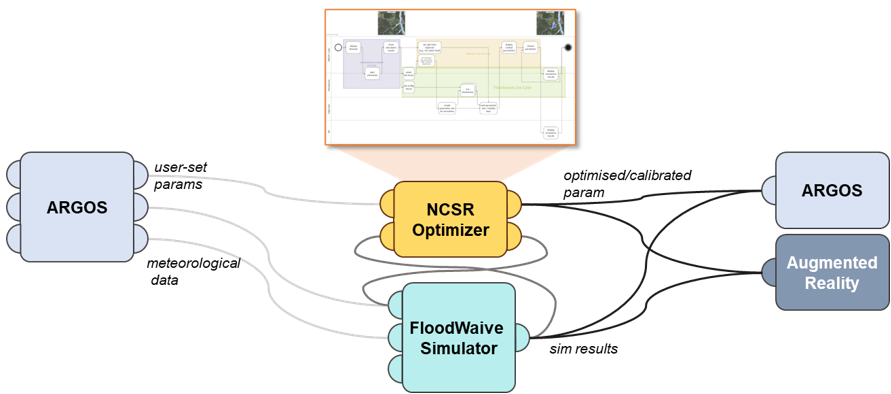
A core technical achievement is the integration of automated optimization methods into real-time simulators. For flood distribution scenarios, Demokritos utilizes a Genetic Algorithm to perform automatic parameter exploration for the FloodWaive simulator. This allows authorities to virtually explore and determine the optimal height and placement of water barriers in the face of impending flooding events.
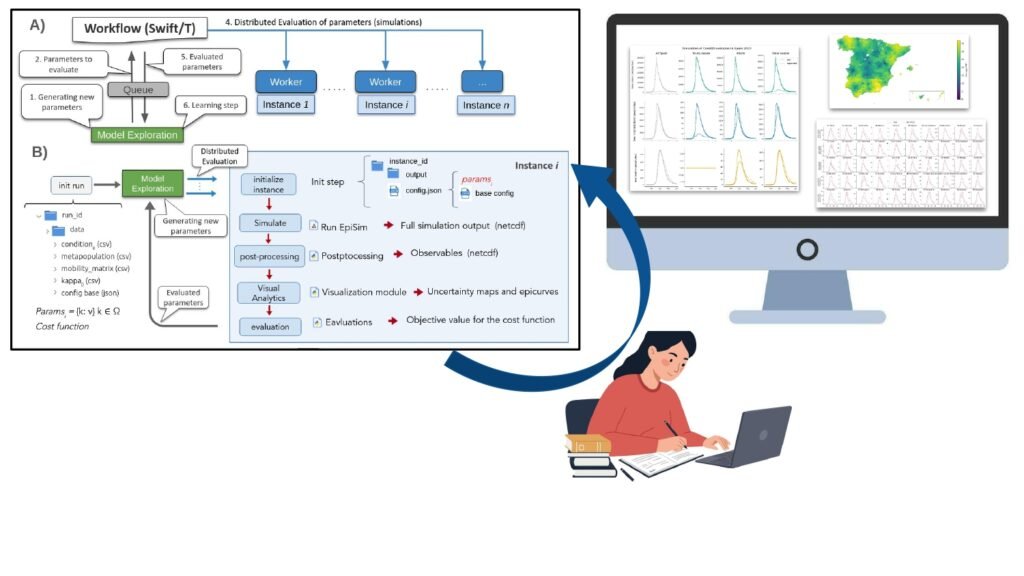
In the health sector, the team has coupled the EpiSim.jl simulator with a Reinforcement Learning (RL) agent. This system was specifically used to analyze the first wave of the COVID-19 pandemic in Spain, systematically evaluating alternative confinement strategies that would be mathematically impossible to assess manually. This RL-driven approach significantly enhances the “explanatory power” of simulations, providing policymakers with robust, data-backed intervention options.
Computational Efficiency: Early Time-Series Classification (ETSC)
Managing extreme-scale data requires extreme efficiency. To prevent the “exhaustive search” that is often intractable in complex simulations, Demokritos has implemented Early Time-Series Classification (ETSC) Algorithms.
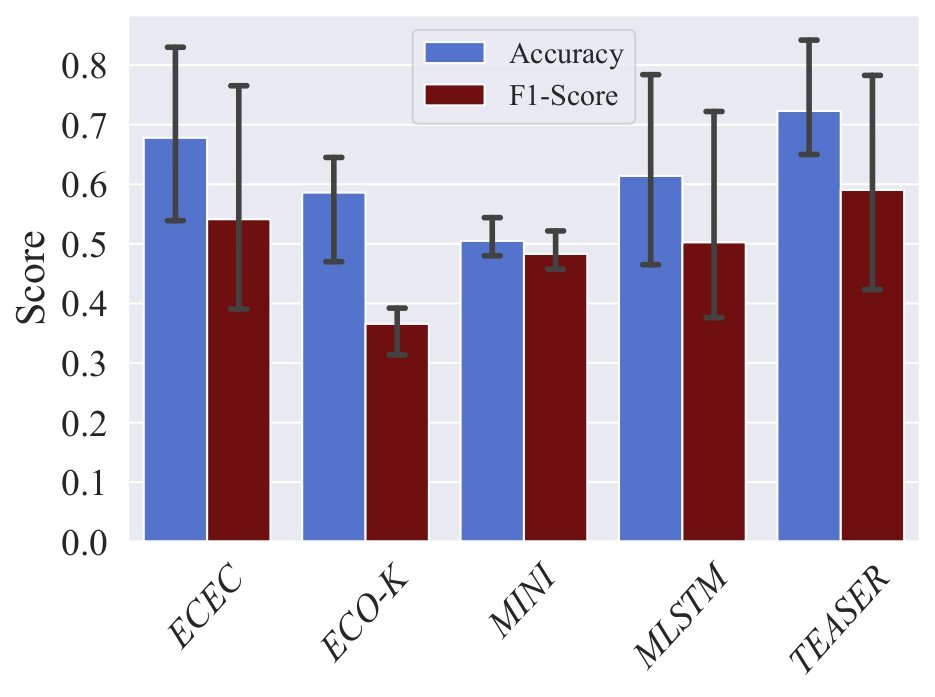
These algorithms are designed to monitor simulation progress in real-time. If the system detects that a simulation is trending toward an outcome of “low interest,” the ETSC algorithm triggers an early termination, freeing up critical computational capacity. Benchmarking within the CREXDATA framework has highlighted TEASER as high-performing algorithms achieving accuracy scores above 0.7.
Synergistic Human-AI Interaction
Beyond pure automation, the project emphasizes a “synergistic” loop where experts work alongside ML models. In multiscale health simulations (using PhysiBOSS), researchers can steer alveolar infection models based on live biological metrics like viral load. This transforms simulation from a static execution into a continuous, user-guided process.
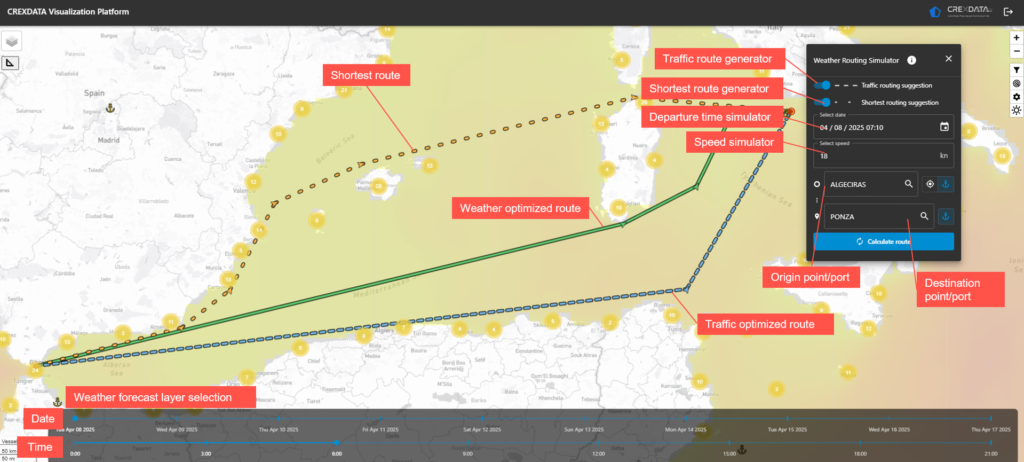
Similar interactive capabilities have been extended to the Maritime Use Case, where a dedicated graphical user interface (GUI) allows operators to ingest vessel positional data and adjust parameters for collision avoidance and hazardous weather routing.
Through these technical contributions, NCSR Demokritos is establishing a framework where interactive learning and AI-driven optimization turn “extreme data” into actionable, life-saving intelligence.