

In a major step toward extreme-scale predictive analytics, the National Center for Scientific Research “Demokritos” has announced significant technical milestones in the development of the EU-funded CREXDATA platform. By evolving the Wayeb engine from a standard Complex Event Recognition (CER) tool into a proactive forecasting powerhouse, researchers are establishing a new technical standard for managing critical “future-world” scenarios.
Technical Breakthrough: Neuro-Symbolic Forward Recognition
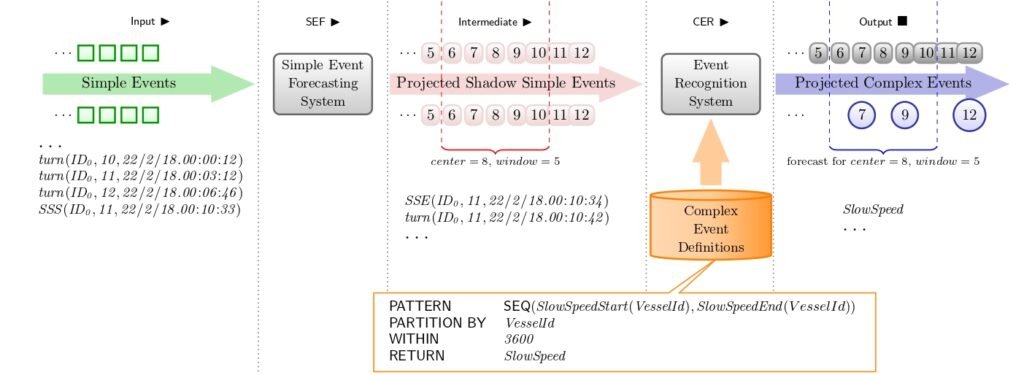
The primary technical shift involves moving from reactive “Recognition” to proactive “Forward Recognition.” This architecture utilizes a Neuro-Symbolic approach where high-dimensional data streams are first processed by Neural Networks (such as Temporal Fusion Transformers) to perform raw regression.
The output of these neural models consists of “projected shadow events,” which are then processed by the Symbolic CER engine. This allows the system to detect complex patterns within the predicted future, supporting multi-resolution forecasting where data can be aggregated or smoothed to provide high-level situational awareness.
Enhanced Expressivity via Symbolic Register Transducers (SRT)
To address the limitations of existing pattern-matching engines, Demokritos has extended the computational model of Wayeb with Symbolic Register Transducers (SRT). Unlike traditional engines that struggle with relational constraints, SRT enables the system to handle:
- n-ary Predicates: Analyzing complex relationships between multiple data points simultaneously.
- Trend Detection: Identifying specific mathematical trajectories, such as decreasing trends in epidemiological data or fluctuating maritime speeds.
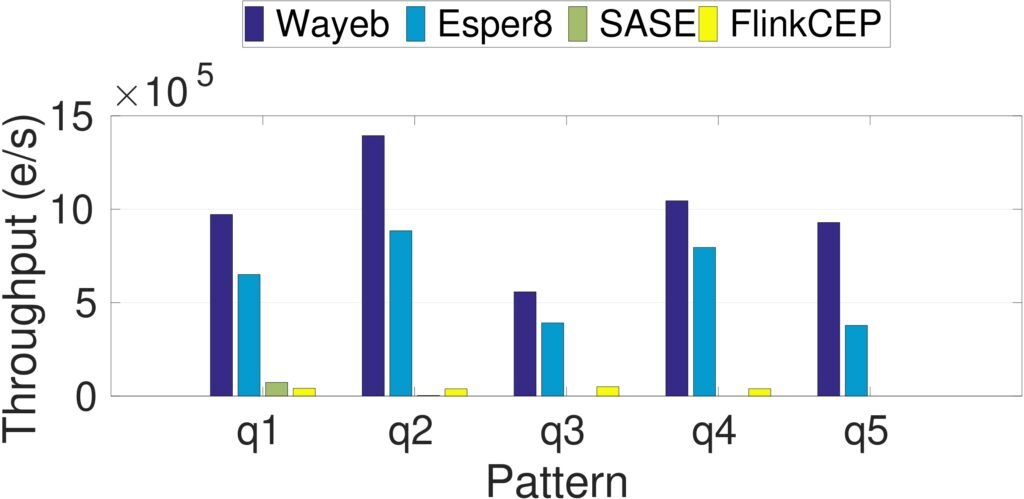
Benchmarking results indicate that this SRT-enhanced architecture maintains a throughput of over 1.5 million events per second, significantly outperforming standard industry engines like FlinkCEP and SASE.
System Optimization: RTCEF and Hierarchical RSS
To ensure the system remains robust under dynamic, extreme-scale conditions, the team implemented two critical optimization frameworks:
- RTCEF (Run-Time Optimization of Complex Event Forecasting): An online training loop that monitors model performance and triggers automatic re-training when data drift is detected, ensuring the forecasting accuracy remains above critical thresholds.
- RSS (Run Sharing and Synchronization): A novel top-down approach for Hierarchical CER. By synchronizing predicate evaluations across the hierarchy, RSS reduces redundant computations, resulting in a 30% performance boost in throughput compared to traditional flat implementations.
Empirical Validation in Maritime and Weather Scenarios
The technical efficacy of these advancements has been validated through CREXDATA’s pilot programs:
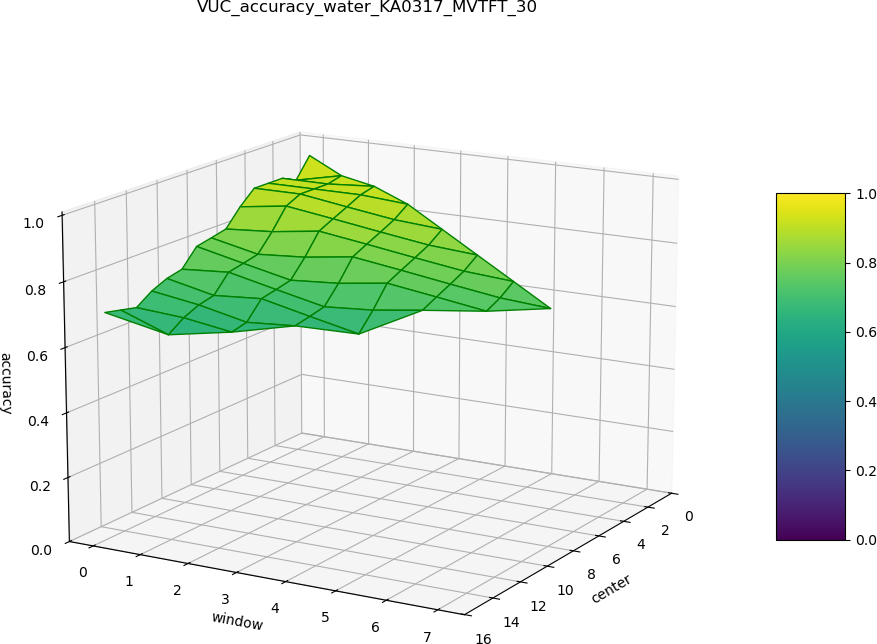
- Weather Emergency Management: Achieving >75% accuracy in forecasting events 30+ minutes in advance in mountainous regions.
- Maritime Awareness: A 300% improvement in the Matthews Correlation Coefficient (MCC), drastically refining the precision of hazardous situation detection in shipping lanes.
Through the integration of these advanced symbolic and neural methods, NCSR Demokritos is positioning the CREXDATA platform as a pioneer in Prediction-as-a-Service (PaaS) for Europe’s critical infrastructure.