





As part of the CREXDATA project, the Finnish Meteorological Institute (FMI) has developed a cutting-edge impact forecasting tool designed to transform how authorities respond to natural hazards. By shifting the focus from traditional weather parameters to actionable risk analysis, the new tool promises to enhance civil protection and resource allocation across the region.
Moving Beyond Weather Forecasts
While traditional meteorological models predict what the weather will be (e.g., wind speed or temperature), FMI’s new solution predicts what the weather will do. This innovative approach provides critical intelligence for emergency management and civil protection agencies, forecasting the specific risk levels of emergency tasks and traffic accidents caused by storms, wildfires, or blizzards.
This shift to “impact-based forecasting” addresses a crucial gap in crisis management. As noted by end-users during recent testing, this method is significantly more useful for operational planning than standard weather data, as it directly translates meteorological conditions into potential operational realities.
Gradient Boosting and Real-Time Data
At the core of the FMI tool is a machine learning model utilizing the Gradient Boosting method. This sophisticated algorithm ingests and synthesizes multiple streams of data to generate its predictions:
- Weather Data: Real-time and forecasted meteorological conditions.
- Impact Data: Historical correlation between weather events and emergency incidents.
- Vulnerability & Exposure: Critical context such as population density and time of day, which significantly alter the risk profile of a weather event.
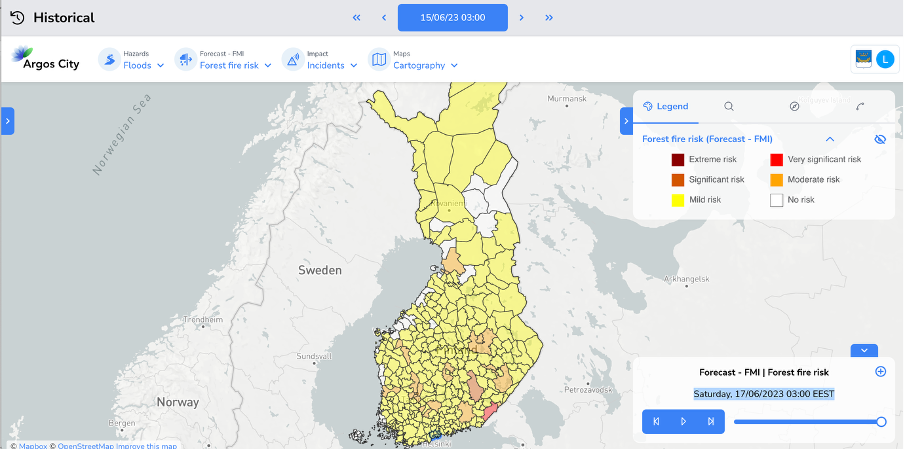
The tool has been successfully integrated into ARGOS, the real-time situational awareness platform used within the CREXDATA ecosystem. This integration allows the system to deliver live risk-level forecasts specifically for the Uusimaa region in Finland at a municipal resolution, enabling highly localized decision-making.
Validated in the Field: The ESAF Exercise
The efficacy of the FMI tool was recently put to the test during a national emergency exercise organized by the Emergency Services Academy Finland (ESAF). Command-level officers used the tool to manage complex crisis scenarios, including simulated forest fires and severe windstorms.
During the exercise, the tool demonstrated its value by:
- Estimating Risk Levels: Identifying municipalities most affected by forest fire risks.
- Operational Planning: Forecasting traffic accident risks and identifying safe time windows for clearing storm damage.
- Resource Management: Providing time-series views that allowed teams to estimate the duration of severe conditions, essential for scheduling official and voluntary shifts.
Outlook and Resilience
The feedback from the ESAF exercise highlighted a pivotal lesson: even high-quality predictive tools must be seamlessly integrated into existing platforms to be effective in the complex environment of emergency management.
The FMI tool represents a significant step forward in building resilience against extreme weather. By communicating benefits clearly and demonstrating practical applications, the project aims to build trust in these new technologies, paving the way for their role in future strategic planning and resource management.